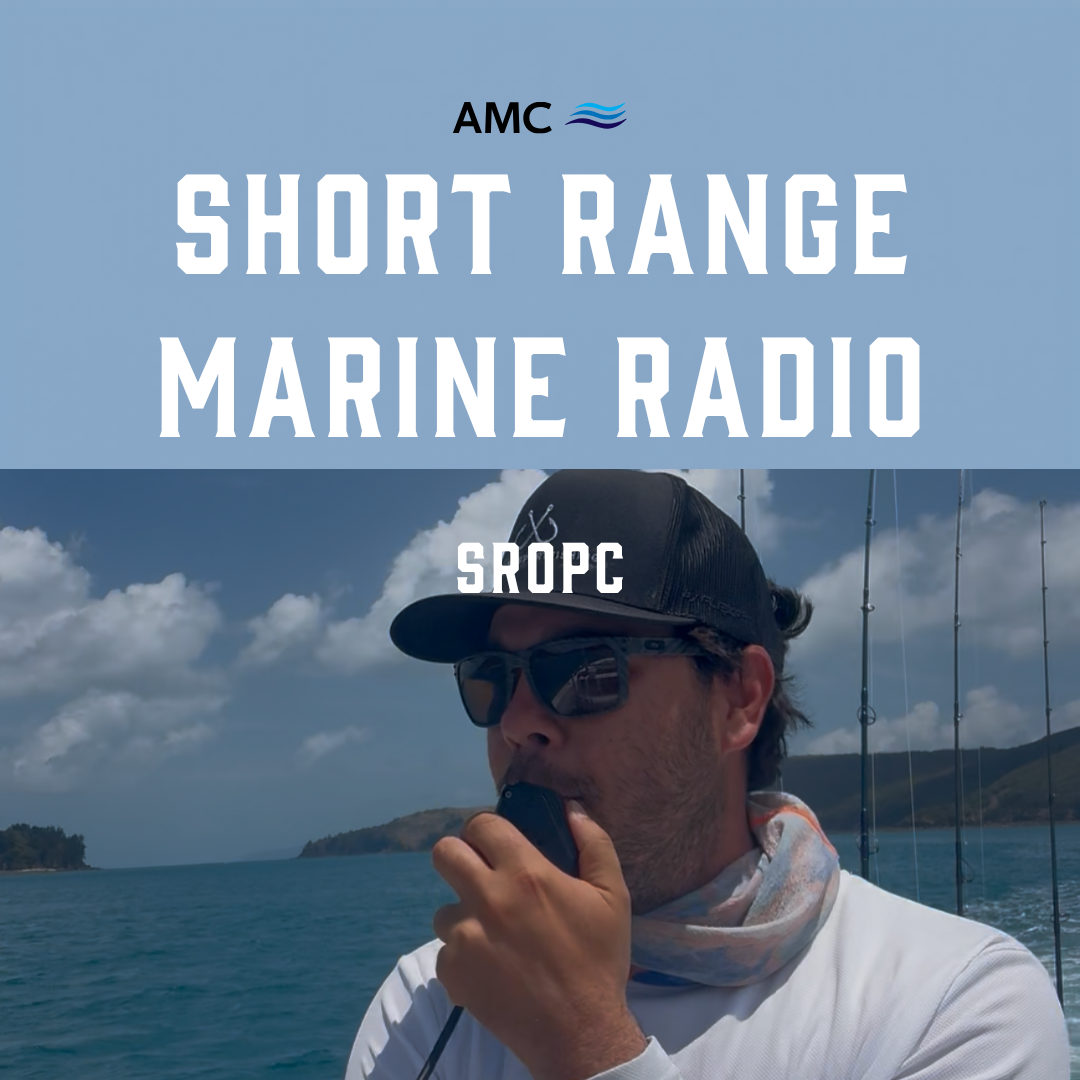
Short Range Marine Radio

Short Range Operator Certificate of Proficiency (SROCP) Course

If you're new to marine radio, the Short Range Operator Certificate of Proficiency (SROCP) is the perfect place to start. This entry-level qualification is required by law for anyone operating a VHF marine radio on Australian waters, and it's easier to obtain than you might think.

Our course is designed with beginners in mind, walking you through everything you need to know in a clear and straightforward way — from understanding marine channels and correct radio procedures, to how and when to send a distress call. No prior experience is necessary.

Upon successful completion of the exam, you'll receive your certificate of proficiency, issued by the Australian Maritime College (AMC) — a qualification that lasts a lifetime with no renewal required.

Get your ticket, get on the water, and enjoy the confidence that comes with knowing how to communicate safely at sea.

How It Works

How It Works
1. Purchase & Book


Simply complete your purchase online and we'll be in touch to arrange a convenient time and location for your examination. As an AMC-registered invigilator, we'll guide you through the entire process from start to finish.


2. Complete Our Online Theory Course


Once booked, you'll receive access to our own online theory course — designed to make studying straightforward and stress-free. Work through the material at your own pace, in your own time, from any device. Our course breaks down the key concepts from the official Marine Radio Operators VHF Handbook into easy-to-follow modules, so you arrive at your exam feeling prepared and confident. We also recommend using the AMC's 131-question revision quiz to further test your knowledge before exam day.


3. Sit the Written Exam


The written exam consists of 25 multiple-choice questions to be completed within 30 minutes, with a pass mark of 70% — that's just 18 correct answers. The questions are drawn from the handbook material, so thorough preparation makes a real difference.


4. Complete the Practical Assessment


The practical component is conducted by your invigilator and is a hands-on demonstration of your radio skills. During this assessment you will be required to:

- Demonstrate a practical knowledge of GMDSS sub-systems and equipment, including VHF radio telephony equipment with Digital Selective Calling (DSC) facilities, and emergency position indicating radio beacons (EPIRBs)

- Demonstrate an ability to use VHF radio telephony and DSC operating procedures, particularly those relating to distress, urgency and safety
·       Demonstrate an understanding of simple maintenance practices to keep marine radio equipment in good working order

- Demonstrate a basic knowledge of the Australian marine search and rescue system


5. Submit Your Application


Once completed, your exam paper and application are sent directly to the AMC's Office of Maritime Communications (OMC) for marking.


6. Receive Your Certificate


On successful completion, your certificate is issued by the Australian Maritime College — a laminated card that lasts a lifetime, with no renewal required.

Frequently Asked Questions

Do I legally need a marine radio licence?


Yes. Under the Radiocommunications Act 1992, the installation and operation of VHF marine radio equipment aboard any Australian vessel must be authorised by a licence. It's important to note that it's the operator who requires the Certificate of Proficiency — not the radio itself. This applies to both recreational and commercial vessel operators. If you have a VHF radio on board and you're operating it without an SROCP, you are not complying with Australian law.


How long does the course take?

The online theory course can be completed at your own pace — most students work through it in a few hours spread over a couple of sessions. The written exam itself is 30 minutes, followed by the practical assessment.

Do I need any prior experience or knowledge?

Not at all. Our online theory course is designed specifically for beginners and assumes no prior knowledge of marine radio. If you can operate a phone, you can learn to operate a VHF radio.

What does the exam involve?

The exam has two components — a written section and a practical assessment. The written exam consists of 25 multiple-choice questions with a 30-minute time limit and a pass mark of 70%. The practical component involves demonstrating your ability to operate a VHF radio, including making routine and distress calls using correct procedures.

What happens if I don't pass?

Don't worry — you can resit the exam. We'll work with you to identify any areas that need more attention and help you prepare for your next attempt.

Where does the exam take place?

After purchasing your course, we'll contact you to arrange a convenient time and location for your examination. We aim to make the process as easy and flexible as possible.

How long does it take to receive my certificate?

Once your completed exam is submitted to the AMC's Office of Maritime Communications (OMC), they aim to process your application within 15 working days. Your certificate will then be posted to your nominated address.

Does my certificate expire?

No. Your SROCP certificate is issued for life and does not need to be renewed — making it one of the most cost-effective qualifications you can hold as a boater.

Can I use my own radio for the practical assessment?

Yes, you're welcome to bring your own handheld VHF radio to the practical assessment. If you don't have one yet, we can provide equipment on the day.

I have more questions — who do I contact?

Simply reach out to us via the contact form on this page and we'll be happy to help. Alternatively, when you purchase your course, we'll be in touch directly to answer any questions you may have.